Background
Despite the general worldwide trend of deploying higher frequencies for telecommunications, the performance of antenna concealments at low and mid-band is more relevant than ever. These frequencies offer better building penetration and broader geographic coverage, making them indispensable for wide-area and suburban deployments. For example, much of Verizon's 5G coverage is anchored in C-band, while T-Mobile leverages low-band 600 MHz spectrum to expand rural reach.
Low and mid-band frequencies are also utilized in existing 4G and 5G infrastructure, providing a performance backbone that higher frequencies can't replace. In the U.S., spectrum between 700 MHz and 4.2 GHz is in daily commercial use—supporting mobility, public safety, and fixed wireless access. With AWS-3 (1695–2180 MHz) and C-band (3.98–4.2 GHz) under consideration for re-auctioning between 2025 and 2027, the relevance of these bands will only grow.
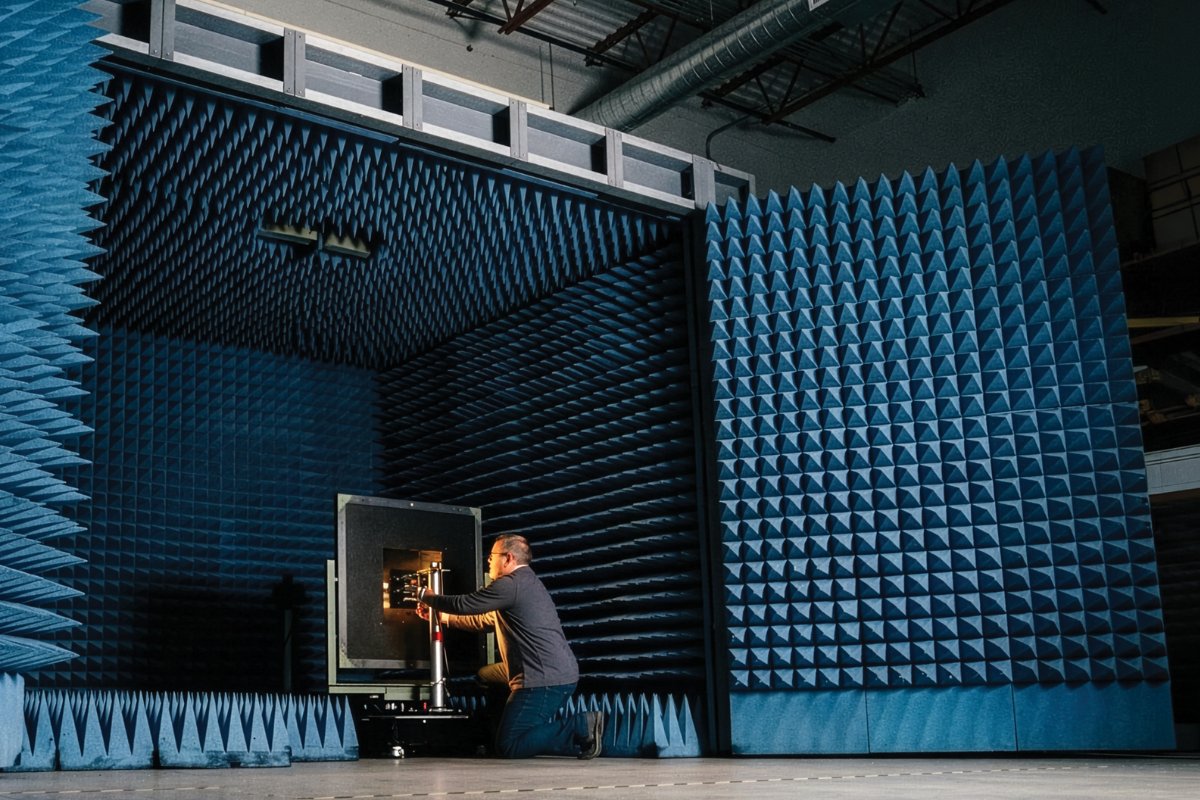
Since 2018, Valmont Telecom has led internal R&D projects focused on understanding material performance from 700 MHz up to 40 GHz. These efforts assess how concealment materials affect transmission loss and antenna patterns, especially when installed in the near-field of the antenna. Outcomes are compiled into a proprietary RF Material Selection Matrix, now central to the design of Valmont's concealment products, including macro site solutions and mid-cell poles.
Concealment Basics
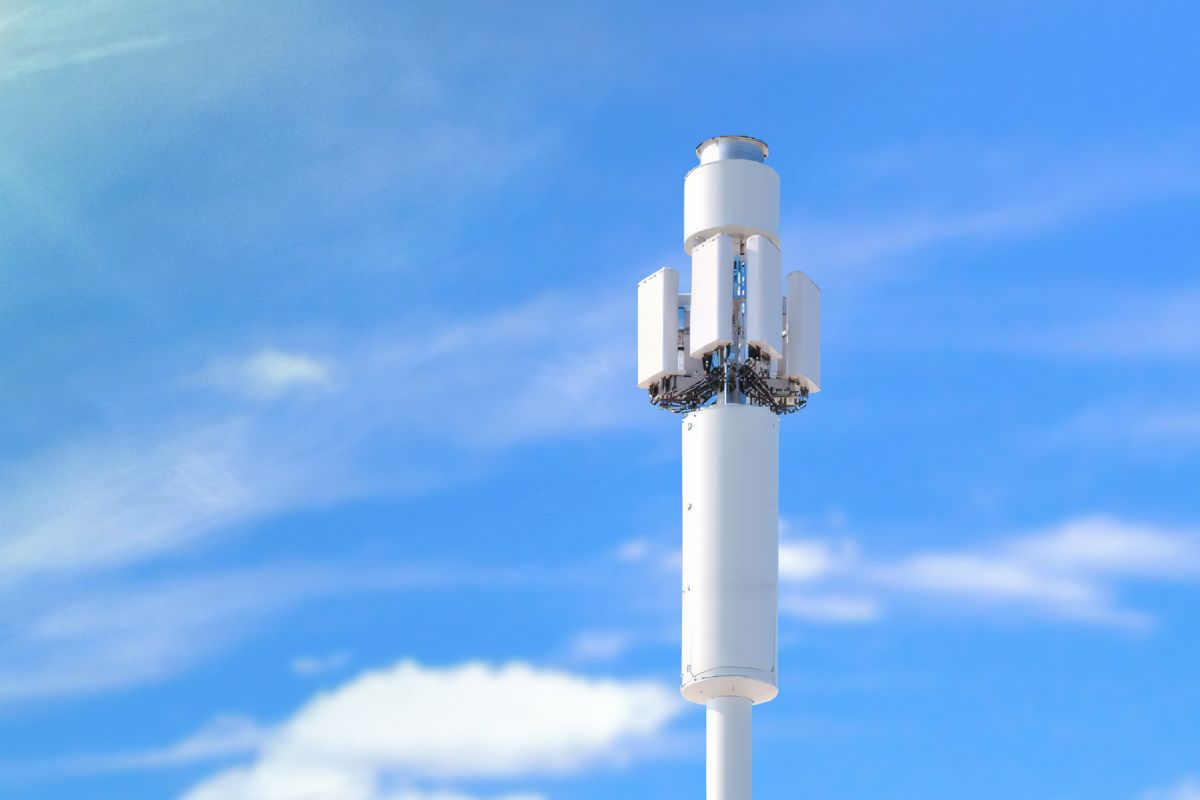
A concealment is an RF-transparent dielectric structure that houses or wraps around antennas, essentially acting as a second radome. The goal is to make the site visually discreet without compromising antenna performance. For effective concealment, the material should transmit radio waves with minimal reflection or absorption. This is influenced by the dielectric constant (relative permittivity) and loss tangent of the material.
Electrically thin materials—those less than 0.1 wavelengths thick—typically perform well. However, at higher frequencies, even common concealment materials can become electrically thick. In such cases, selecting a material thickness that aligns with half-wavelength resonance can maximize transmission. Because material properties at high frequencies are often unknown or vary with orientation, Valmont Telecom uses direct measurement of transmission loss across frequency ranges and distances to screen materials quickly and accurately.
Access the full article below.